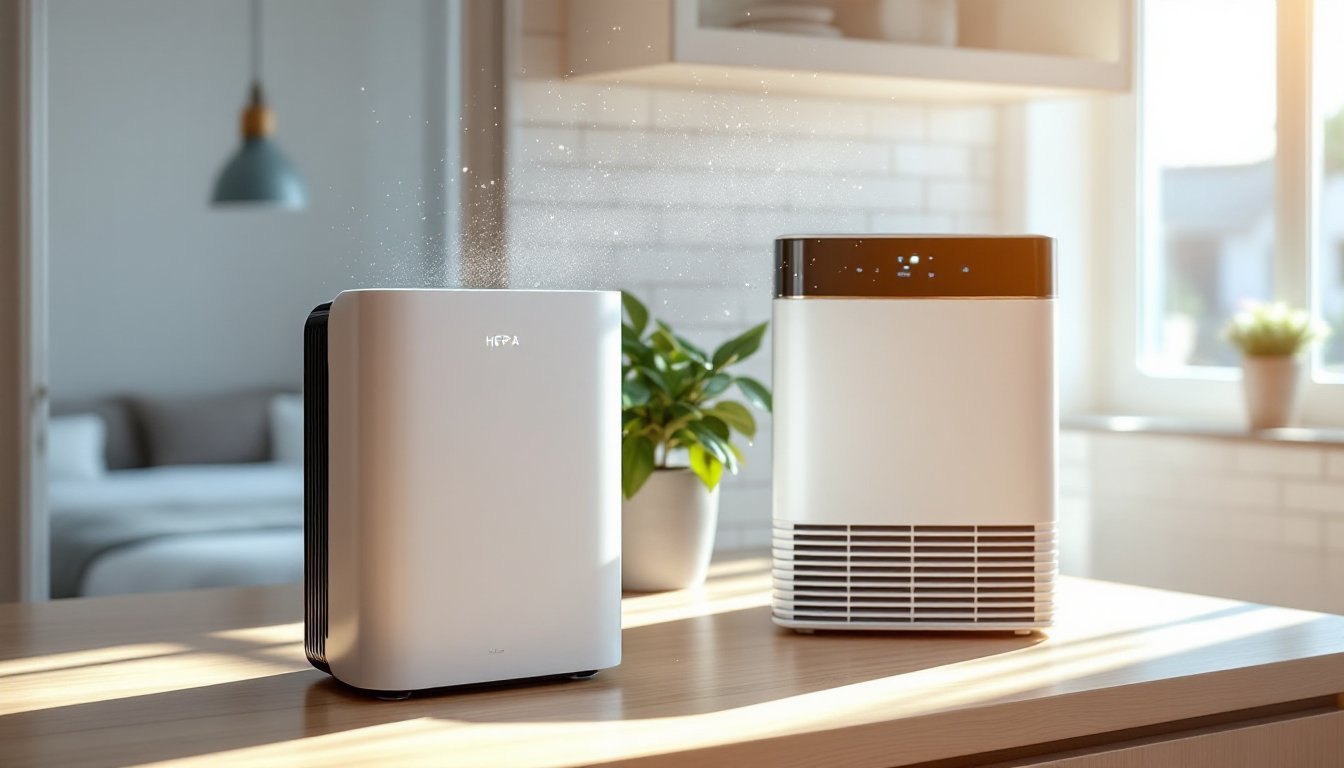

Many homeowners wonder whether they need an air purifier or a dehumidifier, or maybe both. They sound like they do similar things, but they’re actually solving entirely different indoor air problems. An air purifier filters out airborne particles like dust, pollen, and pet dander. A dehumidifier removes excess moisture from the air. Understanding the core difference between an air purifier and dehumidifier helps you invest in the right equipment for your specific situation. This guide walks you through what each device does, the problems they solve, and how to decide which one your home actually needs.
Table of Contents
ToggleKey Takeaways
- An air purifier removes airborne particles like dust, pollen, and pet dander through filtration, while a dehumidifier removes excess moisture—they solve different indoor air problems and aren’t interchangeable.
- Choose an air purifier if you have allergies, asthma, pets, or live in areas with poor outdoor air quality or wildfire smoke.
- Opt for a dehumidifier when you see condensation, smell musty odors, spot mold growth, or experience sticky humidity above 60% that promotes dust mites and mold.
- Portable air purifier and dehumidifier units cost $100–$500 each and are a cost-effective starting point before investing in whole-home systems.
- Many homes benefit from using both devices together: a dehumidifier to control moisture in basements and bathrooms, plus an air purifier in bedrooms for allergy relief.
Understanding the Core Difference: Purpose and Function
An air purifier and dehumidifier are about as different as a vacuum cleaner and a squeegee, they both address air quality, but they work in completely opposite directions.
An air purifier uses mechanical or electronic filtration to trap tiny particles floating in the air. Think dust, pollen, pet hair, smoke, mold spores, and bacteria. The device pulls air through filters (usually HEPA filters) and cycles clean air back into the room.
A dehumidifier pulls moisture out of the air. It works by drawing humid air over cold coils, condensing that moisture into water droplets, and collecting them in a tank or directing them to a drain. What you get back is drier air.
The key difference: an air purifier cleans the air by removing particles, while a dehumidifier changes the air’s moisture level. You can have clean, dry air, clean humid air, dusty dry air, or dusty humid air. These two devices handle different variables.
Air Purifiers: What They Do and Why They Matter
Air purifiers are built to catch tiny stuff you can’t always see. When someone in your home has allergies or asthma, an air purifier matters. It removes pollen, dust mites, pet dander, and some volatile organic compounds (VOCs) from indoor air.
A typical HEPA filter (high-efficiency particulate air) captures 99.97% of particles down to 0.3 microns. That’s small, pollen is about 20-30 microns, but mold spores and bacteria are much tinier. Some air purifiers also include activated carbon filters to tackle odors and VOCs from paints, cleaners, and off-gassing from new furniture.
Air purifiers work best in rooms where people spend the most time: bedrooms, living rooms, and offices. A whole-home air purifier can be installed in your HVAC system, but portable units are cheaper and work well for single rooms.
When air quality matters most: If someone in your home has respiratory issues, pet allergies, or you live near heavy traffic or wildfire-prone areas, an air purifier is a solid investment. Pet owners also benefit from removing dander and odor.
Dehumidifiers: Moisture Control and Its Benefits
A dehumidifier solves moisture problems. If your basement feels damp, your bathroom mirror fogs up constantly, or you notice musty smells, you’ve got excess humidity. Indoor humidity above 60% creates conditions where mold thrives and dust mites multiply. A dehumidifier brings humidity down to a healthier range of 30-50%.
Dehumidifiers come in two main types: refrigerant dehumidifiers (most common for homes) use cold coils to condense moisture, and desiccant dehumidifiers use absorbent materials to pull moisture from air. Refrigerant units work best in warmer spaces: desiccant ones perform better in cold basements.
Capacity matters. Dehumidifiers are rated by how many pints of water they can remove per day, typically 30, 50, or 70 pints. A damp basement needs more capacity than a slightly humid bedroom.
Key benefits: Beyond comfort, dehumidifiers prevent mold growth, reduce musty odors, protect wood furniture and electronics from moisture damage, and make your home less hospitable to dust mites and mold spores. In humid climates or older homes with poor ventilation, a dehumidifier isn’t optional, it’s maintenance.
Common Home Problems Each Device Solves
When You Need an Air Purifier
Reach for an air purifier if you’re dealing with:
- Allergies or asthma. Pollen, dust, and pet dander trigger symptoms. An air purifier significantly reduces these allergens.
- Pet owners dealing with shedding. A HEPA filter captures pet hair and dander before they settle on furniture and bedding.
- Smoke, cooking odors, or VOCs. Cigarette smoke, cooking fumes, and off-gassing from new furniture and flooring are best tackled by air purifiers with carbon filters.
- Wildfire or poor outdoor air quality. During wildfire season or in areas with high air pollution, an indoor air purifier creates a clean-air refuge.
- Mold spores (as a supplement). Air purifiers can catch mold spores floating in the air, though they won’t address the moisture source causing mold growth.
When You Need a Dehumidifier
You need a dehumidifier if you’re facing:
- Visible condensation on windows, mirrors, or pipes. This is a red flag that humidity levels are too high.
- Musty basement or crawl space smells. This odor indicates mold and mildew growth driven by excess moisture.
- Mold spots on walls, ceilings, or around windows. Mold thrives above 60% humidity. A dehumidifier prevents new growth and stops existing mold from spreading.
- Dust mite problems. These microscopic pests love humid environments. Dropping humidity to below 50% makes your home inhospitable to them.
- Damp basement or poorly ventilated bathroom. Basements in rainy regions and bathrooms without exhaust fans are humidity trouble spots.
- Sticky feeling in summer heat. High humidity makes temps feel hotter and makes your HVAC system work harder. A dehumidifier improves comfort and efficiency.
Here’s the practical reality: if you smell mold or see condensation, fix the moisture problem with a dehumidifier first. If you have allergies or asthma, add an air purifier. You might need both.
Cost, Energy Use, and Maintenance Considerations
Air Purifier Costs and Maintenance
Portable air purifiers run $100-$400 for solid consumer models. Whole-home units installed in your HVAC system cost $500-$2,000 plus installation. Running costs are modest, a typical portable unit uses about 100 watts, costing roughly $10-$15 per month in electricity.
Maintenance is straightforward: replace HEPA filters every 6-12 months depending on air quality and usage. Pre-filters catch larger particles and last longer. Carbon filters typically need replacement every 3-6 months if you’re dealing with odors.
Dehumidifier Costs and Maintenance
Portable dehumidifiers range from $150-$500. Whole-home dehumidifiers integrated into HVAC systems run $1,500-$3,500 installed. Larger capacity units draw more power, a 50-pint dehumidifier uses about 500-700 watts and runs maybe $40-$60 monthly if running continuously.
Maintenance depends on the model. Empty the water tank regularly (daily in very humid spaces) or set up continuous drainage to a floor drain or sump pump. Clean the coils every few months to prevent mold buildup on the unit itself. Some units have washable filters: others don’t.
Combination Units
Some newer models blend air purification and humidification, or dehumidification, into one device. These combo units can make sense for small spaces or if you need both functions, though specialists often outperform hybrids. Recent testing of best air purifier and humidifier combos shows that dedicated devices typically handle their core job better.
Smart Home Integration
Modern air purifiers and dehumidifiers increasingly offer WiFi connectivity and app controls. Smart home technology news and home automation reviews cover these connected devices, letting you monitor humidity levels and filter status from your phone. For homes in variable climates, auto-humidity sensing dehumidifiers adjust operation as conditions change, saving energy.
Real Cost Comparison
If your home needs both, buying a portable air purifier ($200) and a dehumidifier ($300) costs less than a whole-home integration. Start with portable units, see if they solve your problems, and upgrade to whole-home systems if needed. Many homeowners find that one good HVAC-integrated dehumidifier in the basement plus a portable air purifier in the bedroom handles 90% of indoor air issues.
Before purchasing, measure your space. A small dehumidifier in a 2,000-square-foot basement won’t keep up. Use manufacturer sizing guidelines based on room size, climate, and how damp the space currently is. Similarly, air purifier coverage depends on clean air delivery rate (CADR), higher numbers mean better filtration speed for larger rooms.