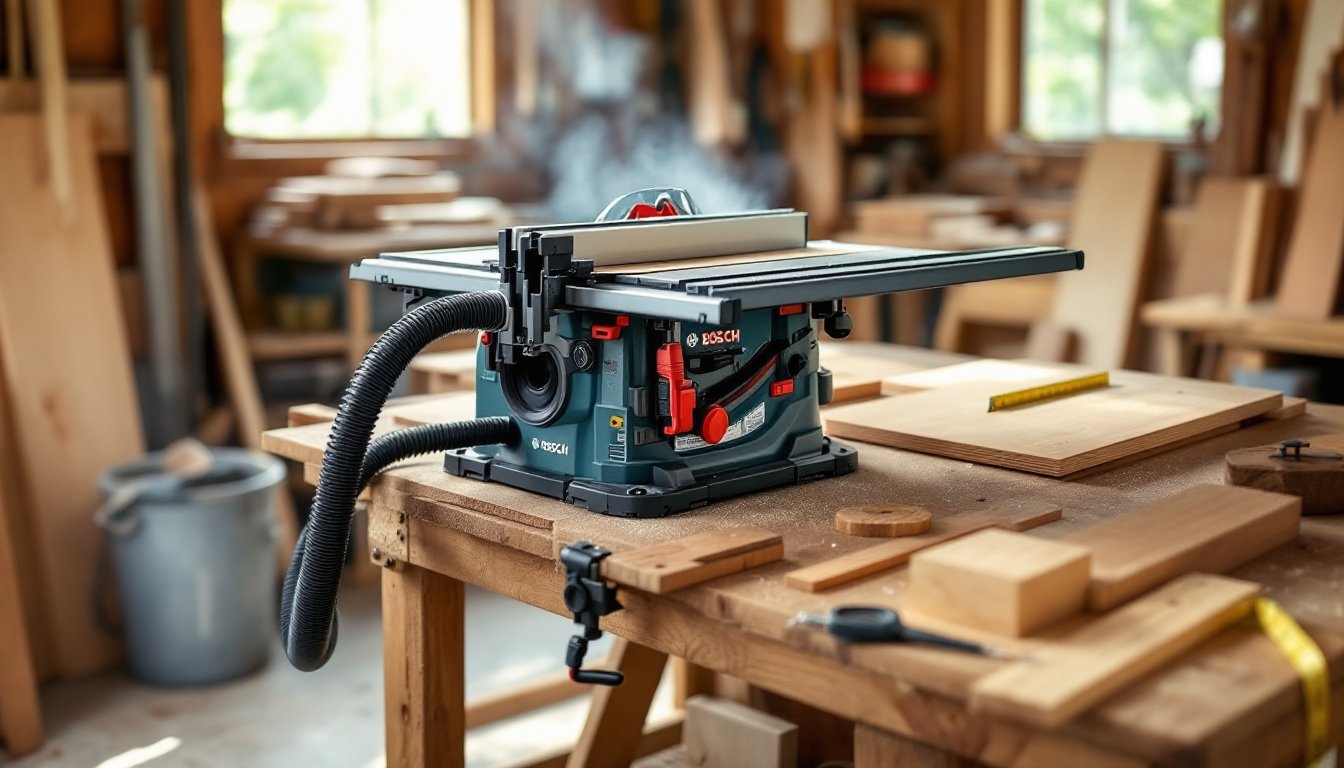

A quality table saw is the backbone of any home workshop, and if you’re considering one, a Bosch table saw is worth serious attention. Whether you’re ripping lumber for shelving, crosscutting cabinet sides, or tackling a deck build, having the right saw, and knowing how to use it safely, separates clean, professional cuts from frustrating mistakes. This guide walks you through why Bosch has earned its reputation, what features matter most for homeowners, and how to set up and maintain your saw for years of reliable service.
Table of Contents
ToggleKey Takeaways
- A Bosch table saw delivers precision cuts and reliability for DIY projects through its accurate parallelogram fences and stable arbor systems that reduce tearout and binding.
- Choose a 10-inch blade with 1.75 HP motor and 24-28 inches rip capacity for optimal performance on common homeowner projects like decking and cabinet work.
- Prioritize safety by always using push sticks for narrow cuts, keeping a blade guard and splitter in place, and unplugging the saw before maintenance.
- Proper setup—including fence alignment, blade height adjustment, and dust collection—takes one hour but ensures clean cuts and years of reliable service.
- Regular maintenance of your table saw, such as keeping the table dry, sharpening blades every 40-80 hours, and checking fence parallelism, prevents accuracy drift and extends tool lifespan.
- A Bosch table saw unlocks projects like ripping lumber, building cabinets with precise repeatable cuts, and tackling deck construction with confidence.
Why Bosch Table Saws Stand Out for DIY Projects
Bosch table saws have carved out a solid reputation in the DIY and contractor world. They’re engineered with a focus on precision, durability, and user-friendly design, qualities that matter whether you’re a weekend hobbyist or tackling ambitious renovations.
One of the biggest strengths is Bosch’s commitment to accurate rip fences. A fence that drifts or binds will throw off your measurements and waste material. Bosch models typically feature parallelogram-style fences that stay square to the blade and glide smoothly. This precision is especially important when you’re cutting expensive hardwood or making dozens of identical parts for a built-in cabinet.
Another advantage is blade stability. A wobbling blade produces tearout and binding, both safety hazards and quality killers. Bosch saws use robust arbor systems and trunnion assemblies that hold the blade rigid across different angles and depths. You’ll notice this when you run a 45-degree miter or rip a thick piece of oak: the cut stays smooth and the saw doesn’t chatter.
They also tend to be lighter and more portable than some competitors, which matters if your workshop is a garage corner or a job site. The Bosch jobsite table saw line specifically addresses this reality, with models designed to be broken down and moved without needing a truck or workshop space. For homeowners, that flexibility is genuine value, you can set up for a Saturday project and fold everything away by evening.
Key Features to Look for in Bosch Models
When comparing Bosch table saws, a few features separate good choices from ones that won’t serve you well long-term.
Blade size matters more than marketing hype suggests. Most Bosch homeowner models come in 10-inch (the standard for contractor and portable saws) or occasional 8.5-inch versions. A 10-inch blade cuts through 2x stock easily and can rip 4x material with proper setup. It’s the practical sweet spot for deck boards, framing, and cabinet work.
Motor power usually ranges from 1.5 to 2.0 horsepower on consumer models. More isn’t always better, a 1.75 HP motor is plenty for ripping 2x lumber and crosscutting plywood if your blade is sharp and your technique is solid. Underpowered saws (under 1 HP) bog down in hardwood and teach you bad habits like pushing too hard, which causes kickback.
Rip capacity tells you the maximum width you can cut from one edge. Most Bosch models offer 24 to 28 inches rip capacity, which is generous for a homeowner. You can crosscut full-width plywood sheets and rip board stock without limitations. The fence needs to be parallel to the blade, even minor misalignment compounds over multiple cuts.
Dust collection is often overlooked. A saw that blows dust everywhere fills your lungs and reduces visibility. Bosch models typically have a dust port that connects to a shop vacuum or dust extractor. A dedicated dust shroud under the blade (not just behind it) captures most chips before they scatter.
According to top table saw reviews and comparisons, contractor-grade features like accurate fences and stable arbors remain non-negotiable for serious DIY work. Budget models that skip these details frustrate users and create safety issues down the road.
Safety Considerations and Best Practices
A table saw is one of the most dangerous tools in any shop. Respect that, and you’ll have years of safe cuts. Ignore it, and you’re asking for a trip to the ER.
Always wear appropriate PPE: Safety glasses (not just regular glasses, the plastic blocks flying splinters better), ear protection (a table saw runs at 80–90 dB), and a dust mask or respirator if you’re cutting MDF or hardwood all day. Avoid loose clothing and never wear gloves, they can catch on the blade. Long hair should be tied back or covered.
Keep hands clear of the blade. Use a push stick for rips narrower than 6 inches, and a crosscut sled for shorter crosscuts. A push stick is a simple piece of plywood or hardwood with a notch at the end: it keeps your fingers 12+ inches from the blade. It feels awkward the first few times, but it’s non-negotiable. Make one from scrap, you’ll feel foolish if you lose a fingertip because you didn’t spend 5 minutes building a 50-cent safety tool.
Never reach over the blade or freehand-feed material. Always use the fence for rips and a sled for crosscuts. Your brain can’t react faster than a spinning blade.
Unplug the saw before changing blades, adjusting fences, or clearing jams. A slip or accidental flip of the switch while your hand is near the blade is catastrophic.
Check your blade before each session. Dull blades require more force, kick back more often, and overheat. A sharp blade cuts faster and safer. Replace or sharpen every 40–80 hours of heavy use, depending on material.
Use a blade guard and splitter. Some homeowners remove these because they think they get in the way. They do get in the way, that’s their job. A splitter keeps the kerf open and prevents kickback. Bosch models come with guards: use them.
Setting Up Your Bosch Table Saw for Success
A saw that isn’t set up right will frustrate you and produce poor cuts. Spend an hour on setup before your first project.
Start with the blade. A 10-inch, 40-tooth carbide blade is a solid all-purpose choice for most Bosch models. Install it with the arrow pointing in the direction of rotation (usually clockwise when viewed from the right side). Check that the blade runs true to the table, any wobble means the blade, arbor, or flange is damaged.
Align the fence. This is critical. Measure the distance from the blade to the fence at the front and back. Both sides should be equal and parallel to the blade. If the rear of the fence is closer, material will bind between the blade and fence, causing kickback. Loosen the fence mounting bolts slightly, adjust, and tighten. Check it again after tightening, your wrench pressure can shift things.
Set the blade height. For most cuts, raise the blade so about 1/4 inch of tooth protrudes above the workpiece. This minimizes tearout and is safer than running the blade too high.
Connect dust collection. Attach a 4-inch hose to the dust port and run it to a shop vacuum or dust collector. A saw without dust collection fills the air with fine particles that settle on everything and enter your lungs. Not worth it.
Set up an outfeed table or support. Full-size sheets and long boards need support behind the saw to prevent tipping and binding. A simple 2×4 frame with plywood decking works fine. It should be roughly flush with the table height.
Once these basics are dialed in, your saw will produce clean, square cuts and feel safer to use. Recalibrate after the first few projects, especially if you’ve moved the saw or made rough adjustments.
Common DIY Projects That Benefit from a Table Saw
A table saw opens up a wide range of projects that are frustrating or impossible with just a circular saw.
Ripping lumber to width is the bread and butter. You buy 1×12 pine boards and need 1×10: the saw reduces them cleanly with a straight, splinter-free edge. For framing, you might rip studs or trim blocking. For furniture, you rip boards to exact dimensions before joinery.
Building cabinet and shelving relies heavily on precise, repeatable cuts. You crosscut plywood to shelf length, rip edge banding or trim to match, and cut dados (grooves routed partway across a board) for fixed shelves. A table saw with a quality miter gauge and sled handles these cuts accurately.
Deck building involves ripping deck boards to length (easier with a miter saw, but a table saw works), ripping trim boards, and crosscutting joists. If you’re building railings, you’ll rip balusters to dimension and cut lap joints or tenons.
Angle cuts become practical once you have a quality table saw. A 45-degree miter for frame corners, box lids, or angled bracing takes seconds with the blade tilted and a sled. A bevel cut (blade at an angle) is useful for door frames and trim work that needs a slight taper.
Box and drawer construction demands consistent, square cuts. You rip boards, crosscut them to length, and cut dado grooves for bottoms or dividers. A saw that drifts by 1/32 inch becomes visibly obvious when you’re fitting parts together.
Those are beginner-friendly projects. Once you’re comfortable, you’ll find yourself reaching for the saw for all sorts of work, it becomes the tool you default to because you trust it.
Maintenance Tips to Keep Your Saw Running Smoothly
A well-maintained saw stays accurate and safe. This doesn’t require fancy procedures, mostly just common sense.
Keep the table clean and dry. Dust and moisture cause rust on cast iron tops and lead to binding fences. Wipe down the table with a dry cloth after use. If you notice rust spots, scrub them with 0000 steel wool and apply a thin coat of paste wax. Paste wax also helps the fence glide smoothly.
Check the blade regularly. A dull blade heats up, produces tearout, and requires aggressive feeding. Listen for unusual pitch or whining, that’s often a sign of dullness or damage. Replace or sharpen every 40–80 hours, depending on what you’re cutting. Cutting MDF, melamine, and treated lumber dulls blades faster than pine.
Inspect the fence and miter gauge. Over time, fences can bend or warp from thermal cycling (heat and cooling). Check parallelism once a month or before important projects. The miter gauge should glide smoothly in its track without binding. If it’s sticky, the track may need cleaning and light lubrication (3-in-1 oil works fine).
Lubricate the arbor and motor bearings per the manufacturer’s manual. Most modern saws are sealed, so over-lubricating is more common than under-lubricating. More is not better, excess oil attracts dust.
Tighten all bolts periodically. Vibration works bolts loose over time. A loose blade arbor nut causes runout (wobble). Check before each major project, especially if you’ve been running the saw heavily.
Practical workshop wisdom and hands-on guides at popular DIY resource sites reinforce that maintenance is the difference between a tool that lasts 20 years and one that frustrates you after 3. A clean, well-tuned saw builds confidence and produces better work.
Conclusion
A Bosch table saw is a worthy investment for homeowners serious about building and creating. It’s accurate, durable, and approachable enough for someone learning woodworking for the first time. Respect the safety requirements, spend an hour getting setup right, and maintain it properly, and you’ll have a tool that pays for itself in cleaner cuts, faster projects, and genuine confidence in your workshop. The real payoff isn’t the saw itself: it’s the projects you’ll finally feel equipped to tackle.